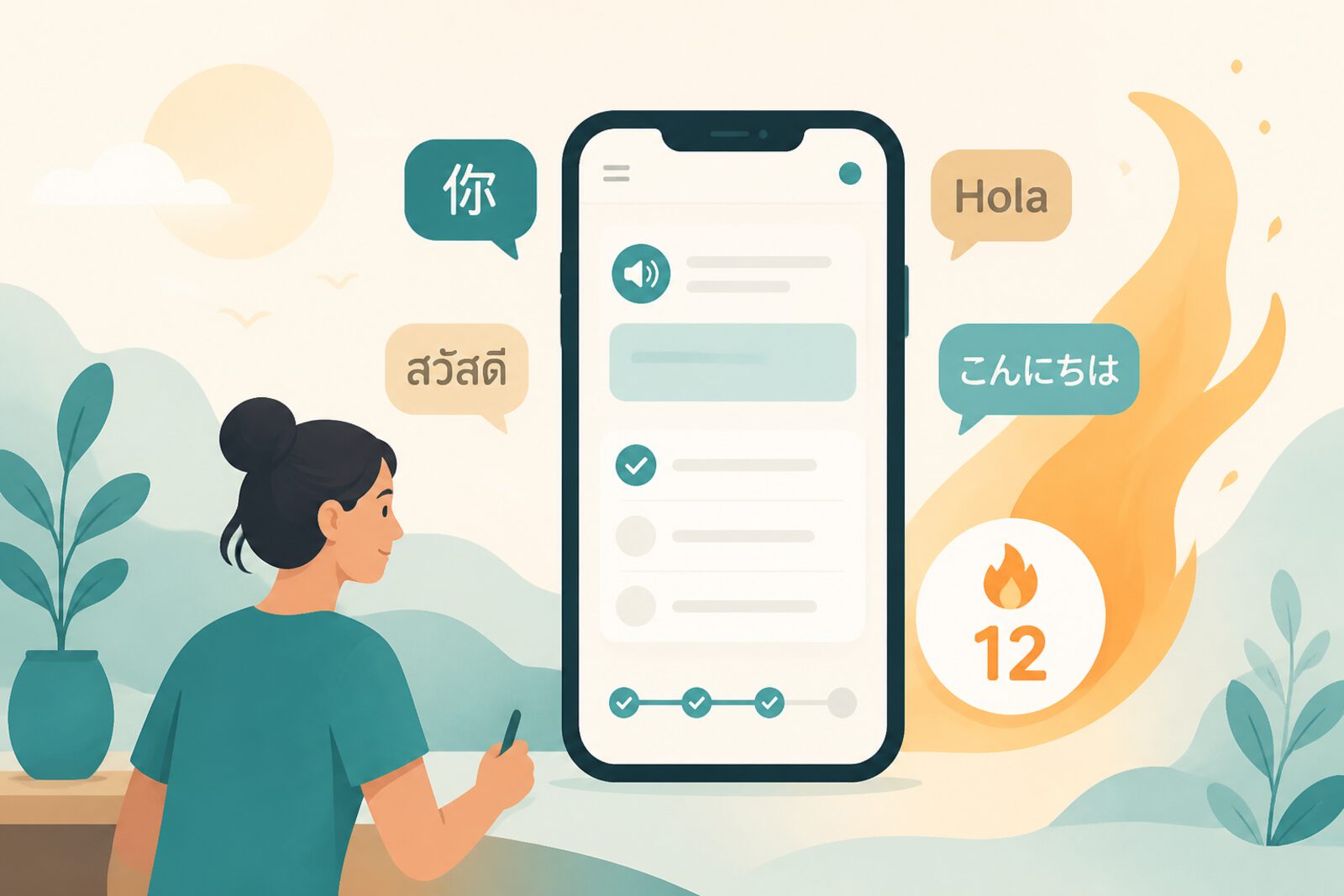
Duolingo is a language-learning app built on micro-lessons: one- to five-minute exercises mixing vocabulary, light grammar, listening, and speaking. Its famous daily streak and gamified design aim to turn study into habit, not a heavy weekend session.
For families learning at home in Chile or LatAm, Duolingo does not replace a full English or other-language program, but it can sustain daily exposure when there are no in-person classes or when you want reinforcement before travel, reading, or exams. The key is how it fits the family routine—not point totals.
What it is and how it works
Units are organized by themes (food, travel, school) and increase difficulty gradually. Duolingo offers free plans with ads and paid options that remove ads and add features. Family plans exist on higher tiers, but many households start with individual accounts and a simple shared schedule agreement.
Gamification—coins, leagues, Duo the owl—motivates some learners and distracts others. Watch whether motivation is to learn or only “not break the streak.” When the second wins, adjust goals.
What it is good for at home
- Short daily exposure to English or other languages available in the app.
- Vocabulary refresh before bilingual books or subtitled shows.
- Pronunciation practice with repeat exercises (headphones and a quiet space help).
- Weekly family challenges: who uses five new words at dinner.
- A bridge to deeper resources (reading, tutor conversation, cultural exchange).
Duolingo works best as a complement: ten minutes after breakfast plus a song or story in the target language beats forty isolated minutes of screen taps.
How to get started
Download Duolingo or use duolingo.com, pick a language, and take the placement test honestly—starting easy reduces dropout. Set a realistic minimum goal (5–10 minutes daily) and a fixed place: kitchen, desk, commute. If several people at home, agree whether leagues are fun or whether everyone progresses without pressure.
Once a month, run a “live test”: ask for directions role-play, describe a photo, or write three sentences without hints. If that does not improve, increase real conversation even if the in-app streak stays perfect.
Limits and cautions
- Automatic translations can sound odd; do not treat every sentence as a perfect model.
- The free version includes ads; check whether they distract the child.
- It does not replace speaking with real people or certified assessment (Duolingo English Test is a separate product).
- Watch very young children and in-app purchases; set parental controls.
- If exercises are only repeated without error, use review modes or drop a level to consolidate.
Duolingo is a habit tool more than a fast fluency tool. Used with conversation, reading, and clear purpose, it adds consistency—the variable most missing when learning languages at home.