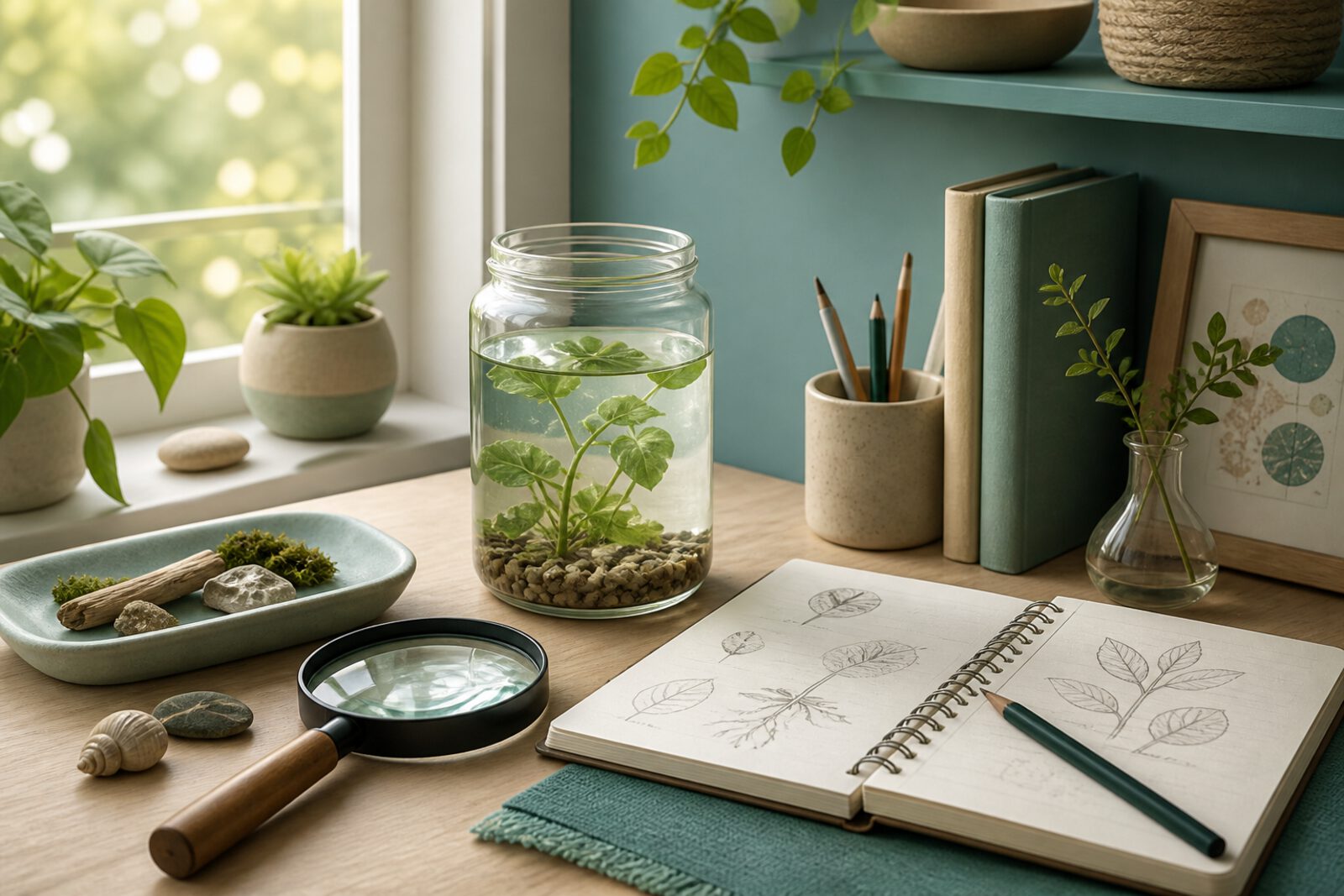
Doing science at home does not require a lab coat. It requires observing, asking, hypothesizing, testing, and recording. That sequence—core to scientific thinking—can live through seed germination, kitchen densities, neighborhood weather, or garden insects.
The method in family version
- Question: what do we want to know?
- Hypothesis: what do we think will happen and why?
- Test: a simple, safe experiment.
- Record: photo, table, or audio.
- Conclusion: what did we learn? what new question appears?
Safety and realism
Prioritize experiments without dangerous fire, harsh chemicals, or improvised electricity. The kitchen and nature are enough for years of exploration. If heat or sensitive materials are involved, the adult leads the handling.
Links to reading and math
Read a short text about the phenomenon. Measure, graph, and compare. Integrated science avoids isolated subjects and looks more like real investigation.
Weekly close
Once a week, choose the best household question and give it 40 minutes. Consistency beats the “big experiment” that never happens. Curiosity is trained like a muscle.