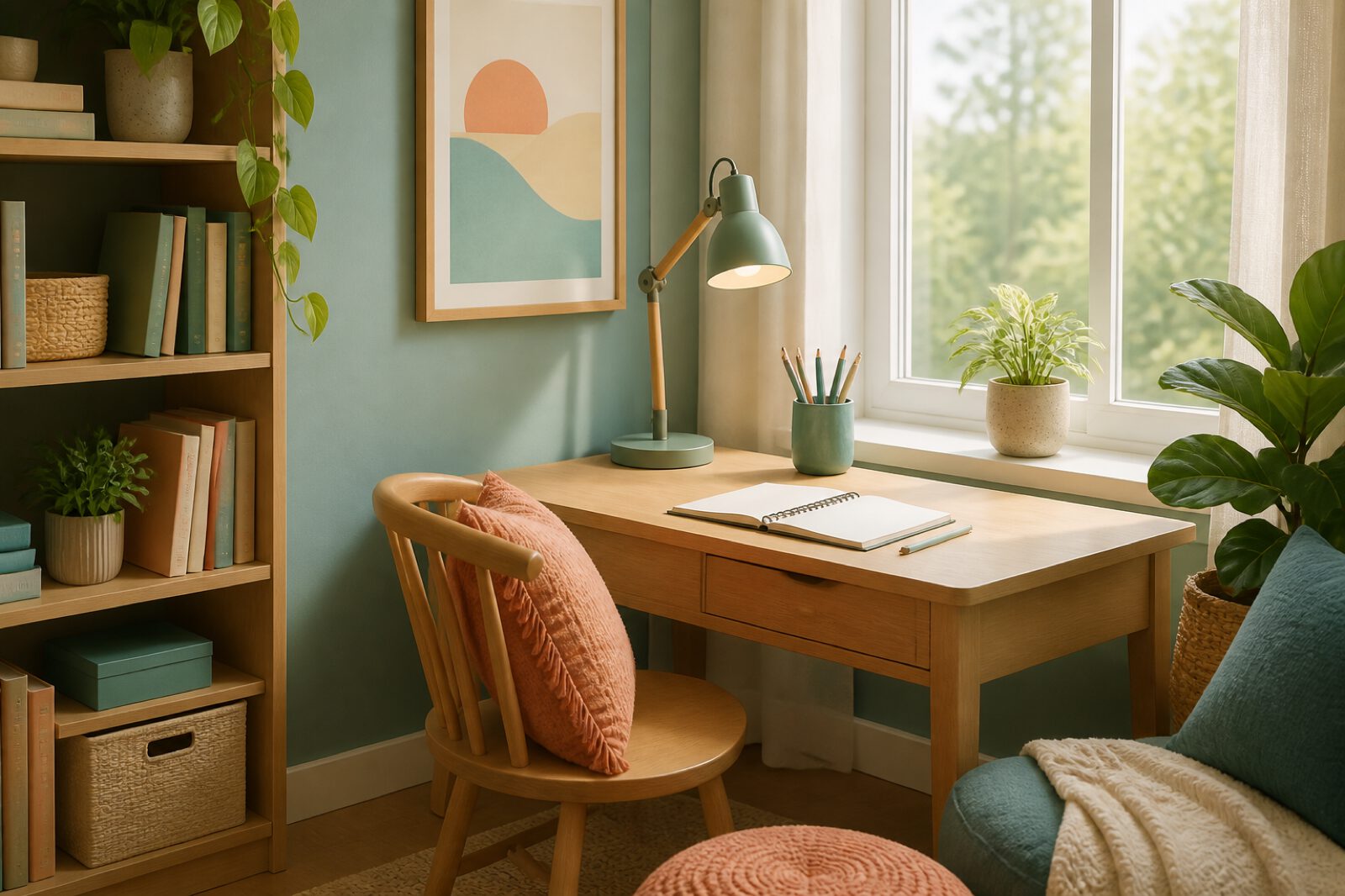
You do not need a perfect classroom. A good home learning space is defined by clarity, comfort, and few distractions—not expensive furniture. Evidence on learning environments and child wellbeing points to simple factors: adequate light, manageable noise, reasonable posture, and emotional safety. That is achievable in small apartments, shared homes, or tables used for both meals and study.
Think of the space as a “stage” that tells the brain: here we focus. It does not have to be exclusive all day. It can be a corner activated by a two-minute ritual: take out the tray, place the notebook, fill a water glass, and start. When the space is associated only with scolding, the body resists before the book opens.
The essentials
- A stable surface for writing or using a computer.
- Natural light or a lamp that does not strain the eyes.
- A seat that allows a reasonably upright back (even if it is not an office chair).
- A fixed or semi-fixed place: the brain associates the spot with “learning mode”.
- Nearby: basic supplies; farther away: toys or screens that will not be used in that block.
- Water at hand and a place to leave an adult phone if it is not needed.
If space is tight
Use a “study tray” or box that gets put away when you finish. Turning the dining table into a desk in 30 seconds still counts. What matters is the ritual of setting up and packing down. In homes where several people share a room, a clip lamp, headphones, and a “study block” sign can set boundaries without building walls.
If noise is high, try quieter time slots, soft instrumental music, or family agreements: “for these 25 minutes we will not interrupt.” It will not always work, but saying it out loud already reduces interruptions. Health organizations also remind us that visual breaks and movement matter as much as the desk itself.
Screens, posture, and breaks
Place the screen at a comfortable distance, preferably at eye level or slightly below. Alternate screen blocks with paper when possible. Every 20–30 minutes, stand up, look into the distance, and stretch neck and shoulders. This is not “wasted time”: it supports attention in the next block.
Avoid making the bed the default study place. It can work for brief reading, but writing or video calls often reduce focus and blur sleep with work. If there is no alternative, use a firm board on the lap and keep that format short.
Emotional atmosphere
A kind space invites staying: a plant, a homemade poster, a motivating photo, or a soft playlist can help. Avoid turning the corner into a punishment zone or a place for long arguments. If conflict happens, change spots for two minutes, breathe, and return with a smaller goal.
Include the child in the design: What helps them focus? What distracts them? Do they prefer silence or a steady background? That conversation teaches self-regulation better than expensive décor. In the end, the space is a habit tool: it should be realistic for your home, not for a magazine.
A Sunday checklist
- Choose the main place and a plan B (for visitors or noise).
- Pack the tray: pencils, paper, charger, headphones, day list.
- Test lighting at the real study time.
- Agree on simple interruption rules.
- Run a 15-minute trial and adjust.
With a “good enough” space, the next step is routine: the time frame that turns the corner into a sustainable habit.