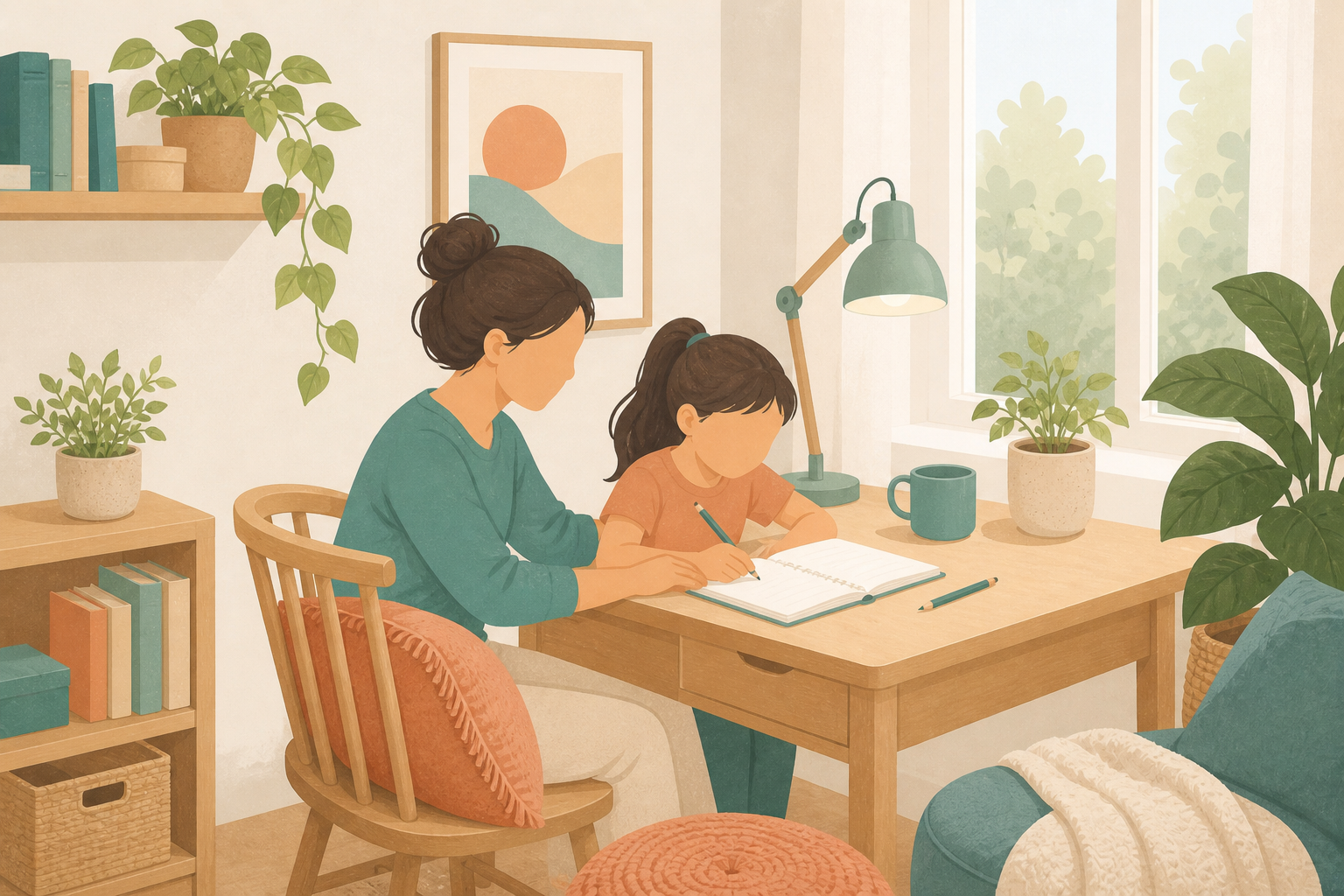
Homeschooling—or home education—is not “doing school homework in the kitchen.” It is a way of organizing learning in which the family takes on, with more or less outside support, the design of the educational day. In Chile and Latin America many families arrive at this idea because of distance, health, travel, pedagogical values, or because they want a more flexible pace than the traditional classroom.
Before buying platforms or building a perfect timetable, clarify the frame: what you seek, what you can sustain, and what your country’s legal context requires. In Chile, for example, validating studies through free exams is a route many families explore; deadlines and requirements should always be checked on official MINEDUC channels.
What homeschooling is (and is not)
It is a family educational project: there are learning intentions, evidence of progress, and a routine—even a light one. It is not school dropout or “screens all day.” Nor does it require copying school minute by minute. Some families use structured curricula; others mix projects, reading, and tutoring. What they share is adult responsibility to accompany and review.
- Yes: a weekly purpose, materials, conversation, and a simple progress record.
- Yes: combining paper, neighborhood outings, and digital tools with intent.
- No: improvising every morning with no map at all.
- No: confusing “being at home” with “learning” without evidence.
First steps without overload
Start with four decisions, not twenty apps. (1) The why: temporary reinforcement, transition, or a full year at home? (2) Priority areas: reading, math, and a third by age. (3) Realistic time: 25–40 minute blocks are usually more sustainable than six-hour days. (4) Evidence: a notebook, project photos, or a light digital portfolio.
UNESCO and organizations working on distance learning agree that quality depends more on accompaniment and pedagogical design than on the sheer number of resources. A small plan well executed beats an overloaded “school at home” that collapses in three weeks.
Where digital tools fit
Platforms help practice, explain, and organize; they do not replace family judgment. In the first weeks a minimum kit is enough: shared calendar, evidence folder, one trusted content source (for example Khan Academy), and if needed a tutoring or educational AI channel with clear rules. Later you can add boards like Padlet, quizzes, or interactive presentations.
Signs you are on track
- The learner can explain in their own words what was worked on that week.
- There is less fight to “get started” because the frame is predictable.
- The adult is not exhausted every day by 11:00.
- There is a plan B when internet fails or mood drops.
Starting homeschooling calmly is a pedagogical decision, not only a logistical one. When the “why” is clear, choosing tools and building a typical week becomes much simpler.