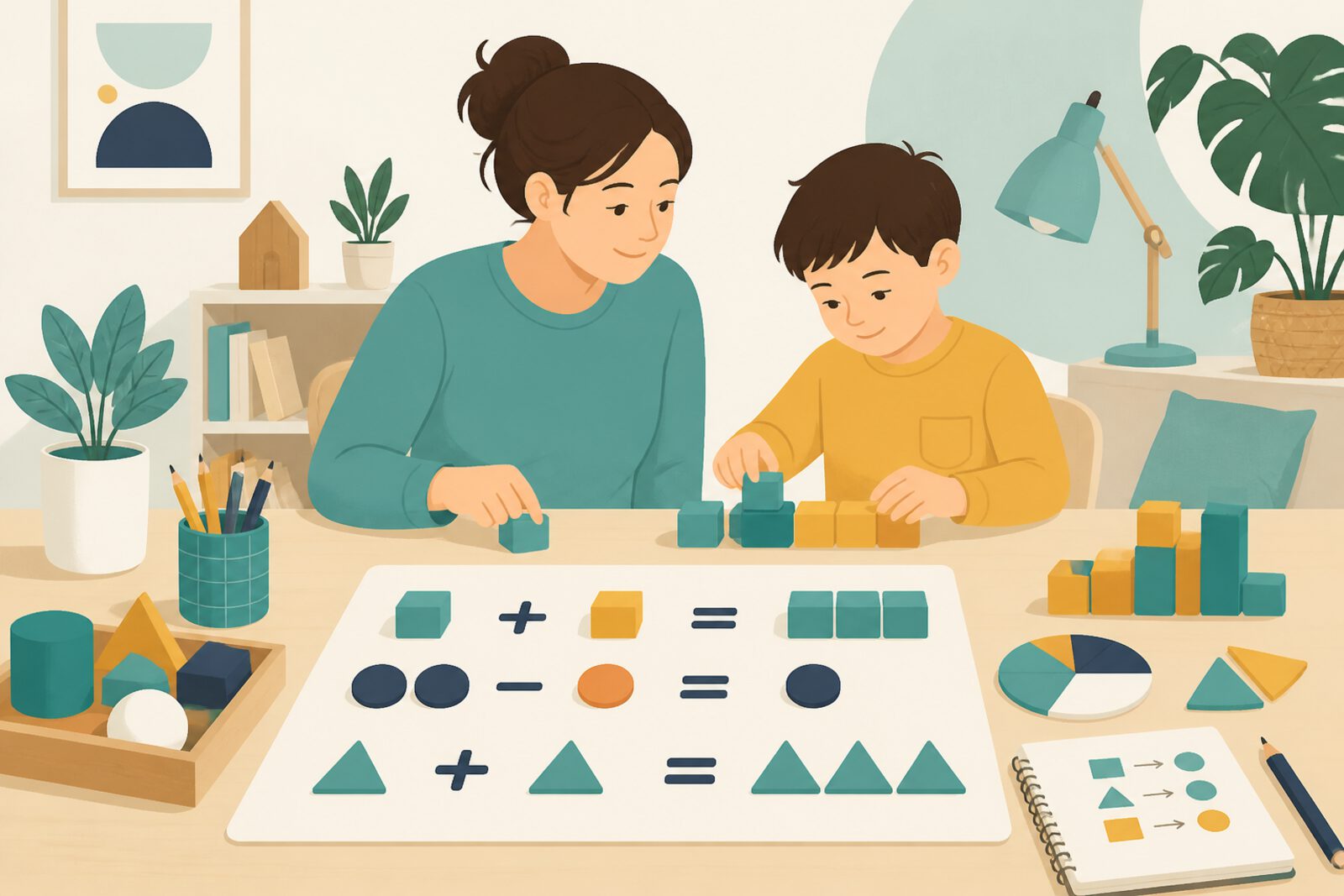
At home, math often becomes “finish the worksheet.” Practice is not the problem: practicing only procedures without meaning is. Active methods invite manipulating objects, drawing, estimating, and explaining why before speeding up the algorithm.
The concrete → pictorial → abstract cycle
First real objects (beans, money, kitchen measures). Then drawings or diagrams. Then symbols and operations. Jumping straight to symbols when there is confusion often creates anxiety. Stepping back is not failure: it is scaffolding.
25-minute routines
- 5 min: warm-up with a mental game or estimation.
- 12 min: rich problem (more than one possible path).
- 5 min: oral explanation of the strategy.
- 3 min: note one useful mistake and what was learned.
Everyday ideas
- Compare prices at the market or supermarket.
- Calculate discounts and tips.
- Measure ingredients and convert units.
- Plan travel time and small budgets.
Conversation matters: “How did you think about it?”, “Is there another way?”, “Is your answer reasonable?”. Those questions build number sense more than repeating twenty identical exercises.
When blocking appears
Shrink the problem, use concrete materials, and celebrate strategic attempts. If distress is high, shorten the session and protect the relationship. The identity of “I am bad at math” is dismantled with small, repeated experiences of success.