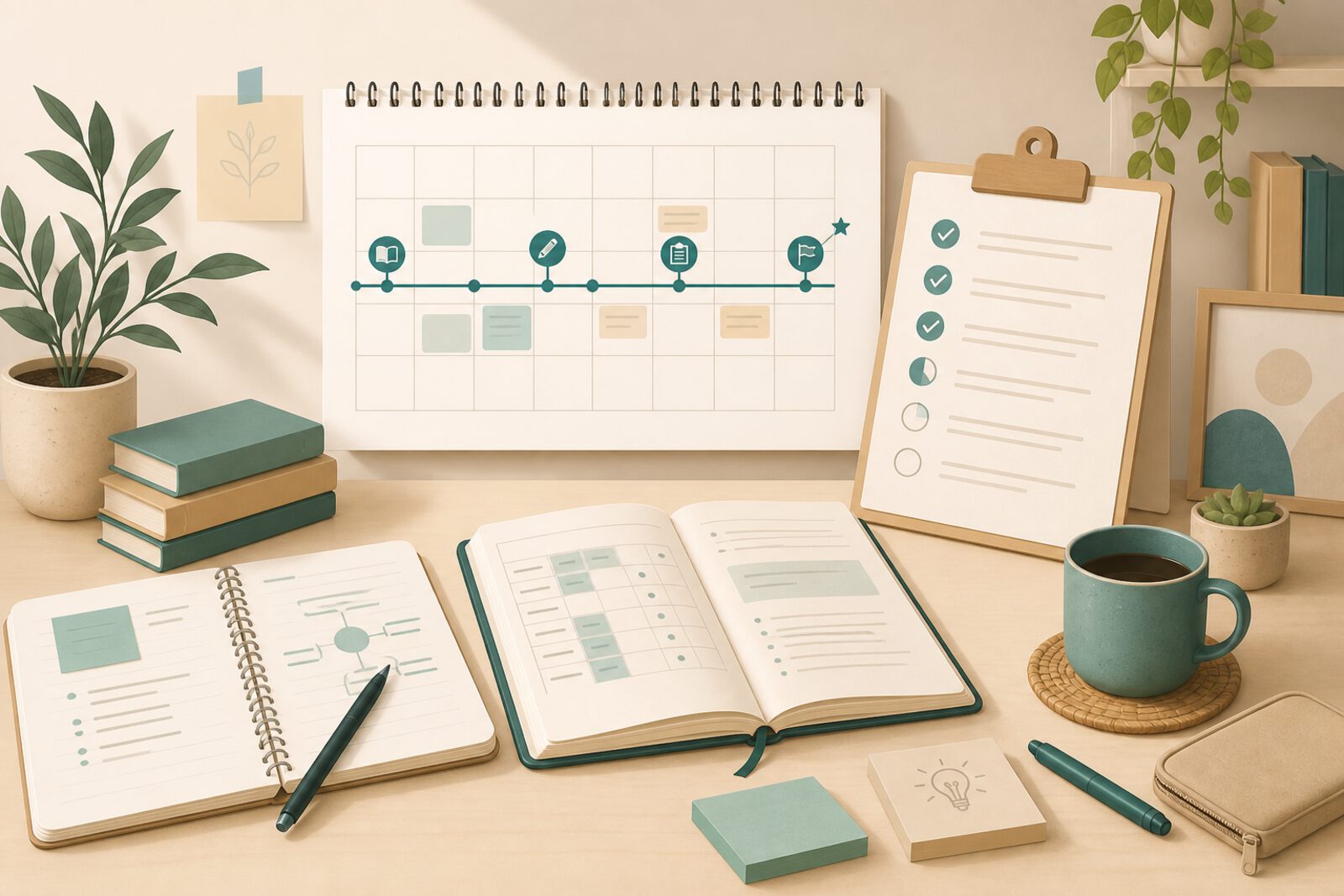
Once you understand how Chile’s free exams work, the next challenge is practical: preparing at home without cramming in the final week. This 12-week plan is for families supporting a child or young adult validating a level. It does not replace official MINEDUC syllabi—it organizes them into a sustainable routine.
Weeks 1–2: map and diagnosis
- Download the official syllabus for the registered (or planned) level.
- Mark green / yellow / red for mastered, shaky, and new topics.
- Set 3 trimester priorities (for example: Language, Math, and one Science/History strand).
- Build a visible calendar with 25–40 minute blocks.
Weeks 3–8: deep study by strands
Each week, pick 2–3 syllabus objectives. Alternate reading/explanation, practice, and teach-back. One weekly evidence piece is enough: a 2-minute audio, a hand-drawn concept map, or a corrected exercise set. If you use tools like NotebookLM, upload only agreed sources and ask for practice questions—then answer without looking.
Include a weekly “short exam” block: 20–30 timed minutes. Not to scare anyone—to train pacing and reduce anxiety.
Weeks 9–10: integration and mock exams
- Review recurring mistakes (a “typical traps” notebook).
- One longer mock per priority area.
- Check logistics: ID, authorization, route to the exam site, arrival time.
- Sleep and movement matter as much as the last note.
Weeks 11–12: sharpen, don’t overload
Reduce new topics. Prioritize oral explanation, key ideas, and rest. The day before: materials ready and a calm talk. Exam day: breakfast, leave with buffer time, and a transport plan B.
Role of the accompanying adult
- Hold the time frame and emotional climate—do not “take the exam” for the learner.
- Ask: “Which part can you explain without looking?”
- Contact the examining entity on time when required.
- Celebrate process wins, not only the final result.
If the level is demanding or there are special educational needs, seek focused tutoring and check Ayuda MINEDUC guidance on supports. A strong family plan mixes the official syllabus, spaced practice, and wellbeing.