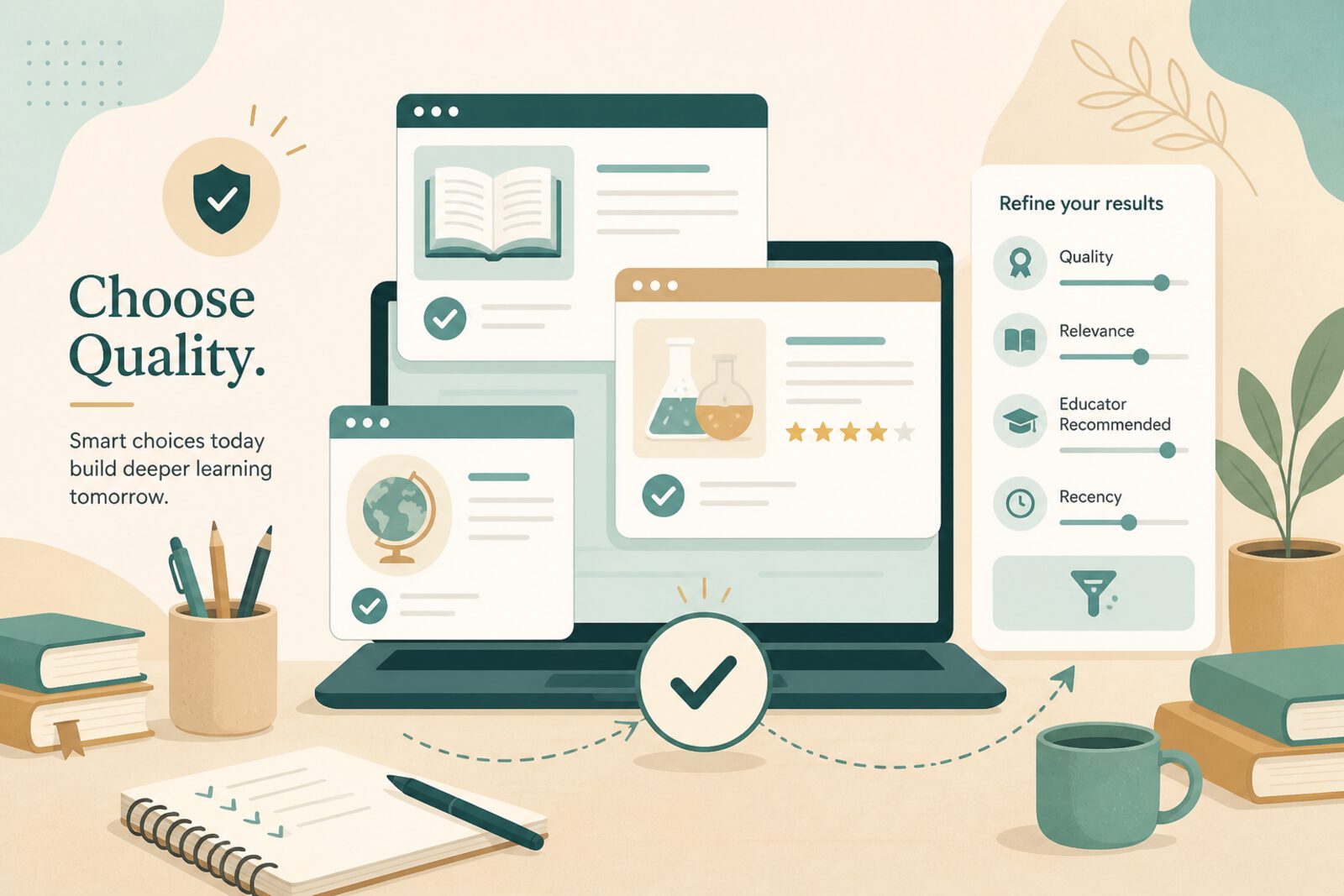
The internet is full of “educational” content, but not all of it teaches equally. For families supporting online learning at home, the problem is rarely a lack of options: it is excess. Choosing well saves conflict, mobile data, and frustration.
International organizations working on education quality share a simple idea: the resource matters less than the pedagogical use. A mediocre video with a good family conversation can beat an expensive platform used without purpose.
Five filters before saving a link
- Clear purpose: reinforce, introduce, practice, or assess?
- Right level: not so easy it bores, not so hard it blocks.
- Clarity and rigor: does it explain with examples? Does it make serious errors?
- Respectful design: little aggressive advertising, no constant purchase pressure.
- Fits your reality: phone, low bandwidth, short time.
Signals of quality (and of noise)
A good resource usually allows pausing, retrying, and explaining in one’s own words. A noisy resource pushes “watch the next one” without understanding. If after 10 minutes nobody can summarize the core idea, the material is not helping—even with millions of views.
Also look at the source: universities, libraries, education agencies, and channels with editorial review tend to be more reliable than anonymous clips. This is not elitism; it is about reducing unnecessary errors and bias.
A family curation routine
Once a month, review the links folder together. Delete what you did not use. Keep only 5–10 “core” resources per area. Fewer favorites, more depth. If a child recommends a channel, ask them to teach for one minute in their own words: that test beats any ranking.
Quick checklist
- Can it fit a 20–30 minute block?
- Does it produce evidence (note, drawing, audio, exercise)?
- Can the adult understand enough to support?
- Can it combine with paper, conversation, or a project?
With a small, good library, the next challenge is usually digital wellbeing: how much screen time, and for what.