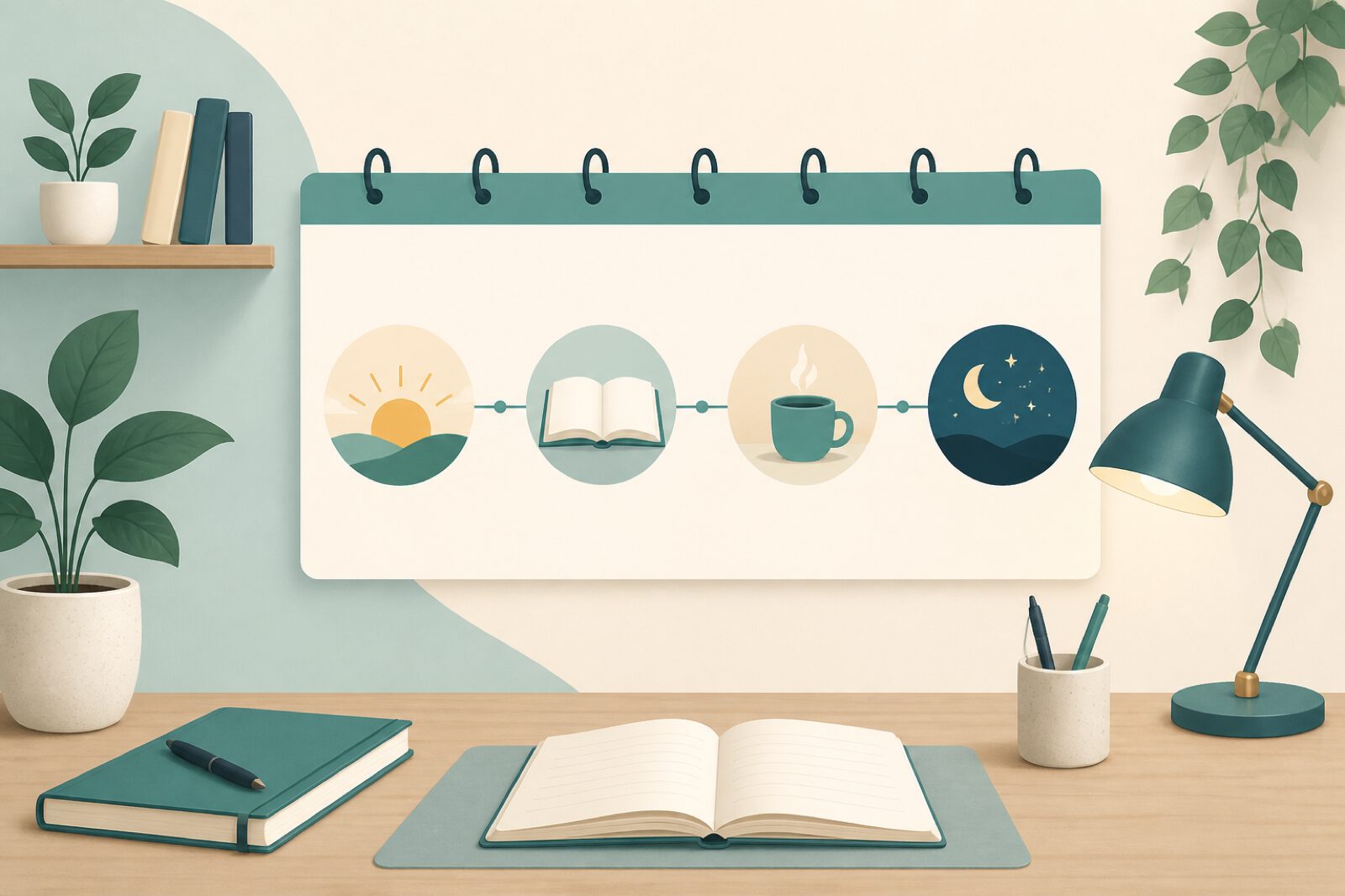
A routine is not a military schedule. It is a predictable frame that reduces negotiation and builds security. In online and home learning, consistency often matters more than one intense day. Children and teens regulate attention better when they know what comes next: focus, then a break, then something lighter, then a close.
Learning science and child-health guidance agree on something practical: the brain needs alternation between effort and recovery. Sleep, movement, and limits on unbroken sedentary time are not “extras”; they are part of the system that makes studying possible. A good family routine mixes learning, real breaks, and ordinary life.
A sample day (adaptable)
- Gentle start: water, tidy the space, review the day plan (10–15 min).
- Deep block 1: 25–45 min of focus on one topic (by age and energy).
- Real break: movement, water, ideally without leisure screens (5–15 min).
- Deep block 2 or creative / problem-solving practice.
- Lunch and genuine rest (not only switching apps).
- Light block: reading, oral review, a project, or a short tutoring call.
- Close: what was learned and what is left for tomorrow (5–10 min).
How to adjust by age and temperament
In early years, short blocks win. In primary school, 25–35 minutes of focus is often more realistic than a forced hour. In secondary school, some students sustain 45–50 minutes—but not every day or at every hour. Watch for yawns, blank stares, irritability, or repeated “I need the bathroom” as signs the block ran too long.
Family chronotype also matters. If your child focuses best mid-morning, do not fight an epic battle at 7:00 only to imitate an external timetable. Protect at least one block at peak energy. Hard tasks go there; lighter ones come later.
Friction-saving tips
Make the plan visible (board, paper, or phone note). Alternate hard tasks with lighter ones. Use visible timers so time is not an abstract argument. Anticipate transitions: “in five minutes we close this block.” Transitions are where emotional climate is most often lost.
Include an agreed “break menu”: jumping, stretching, washing dishes, stepping onto the balcony, playing with a pet. If the break is only social media or games, returning can be hard. Do not demonize digital leisure; place it after a deep block or later in the day, according to what works at home.
When the day falls apart
Keep a 20-minute plan B: a reading, a short quality video, or a hands-on exercise. Completing something small keeps the habit alive. Also keep an emotional plan C: if there was a fight, do not try to “recover” two lost hours the same day. Repair the relationship and restart tomorrow with a minimal goal.
Weekends can be more flexible, but a light anchor (shared reading, portfolio review, preparing materials) prevents Monday shock. The ideal routine is not rigid: predictable enough to calm, flexible enough to survive real life.
Signs of a sustainable routine
- Starting does not require a fight every day (even if it is sometimes hard).
- There is at least one real focus block on most days.
- Breaks include body movement or genuine rest.
- The close lowers anxiety (“we know what we did and what is next”).
- The family can keep it for several weeks without burning out.
With space and routine in place, the next step is choosing digital tools that help without overwhelming you.