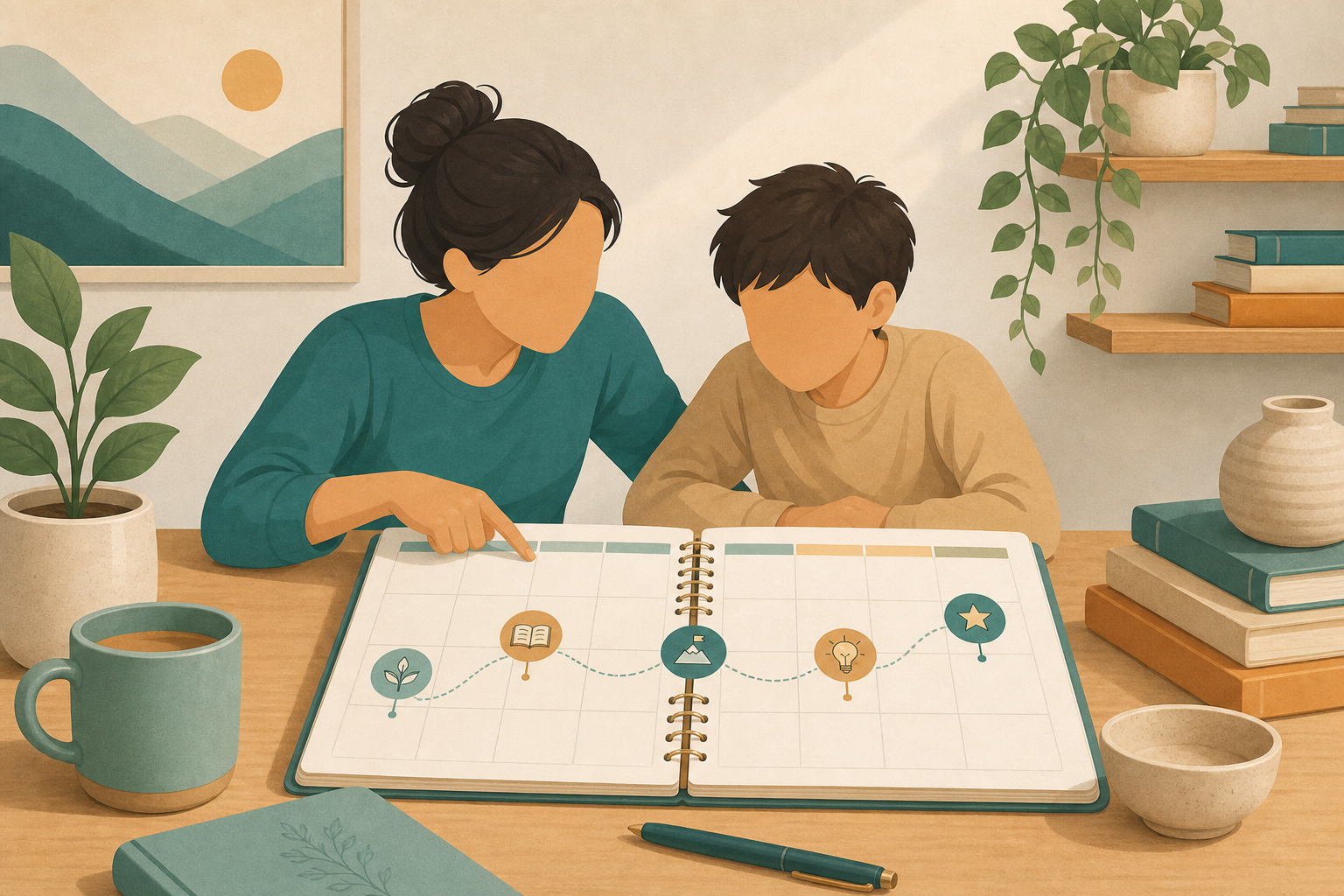
Having tools is not enough: you need a week you can repeat. This proposal is a model, not a dogma. Adjust schedules to ages, adult work, and real energy. The goal is a sustainable rhythm, not copying school at home with more stress.
Each day combines three ingredients: a content block, a practice or creation block, and a short close (explain, save evidence, or play a quiz). Tools serve those blocks—not the other way around.
Monday — Map and math
Morning: review the week calendar (10 minutes). Then 25–30 minutes on Khan Academy or a math notebook, closing with “teach me the new trick.” Afternoon: 20 minutes of paper reading. Evidence: photo of the corrected exercise on Padlet or a shared folder.
Tuesday — Language and explanation
Reading + writing block (half-page summary or one-minute audio). If you use educational AI like EducaXD, ask for comprehension questions, not a ready-made summary. Close with Nearpod/Pear Deck or simply three oral questions from the adult.
Wednesday — Science or project
Curiosity day: a short experiment, neighborhood observation, or progress on a family project. Document on Padlet. If you want to consolidate, build a mini presentation in Genially with five screens, not fifteen.
Thursday — Languages and spaced practice
10–15 minutes of Duolingo or oral practice. Then spaced review of Monday/Tuesday with Kahoot! or Quizizz (10 questions max). Thursday does not introduce new topics: it consolidates.
Friday — Portfolio and brief celebration
The learner picks the week’s best evidence and explains it in two minutes. Together review what worked and what to adjust. A half-day is enough; leave room for free play and rest. Sustainable homeschooling includes leisure without guilt.
Rules that keep the week alive
- At most two “open” tools per day besides the calendar.
- If a block fails twice in a row, shorten it; do not punish by making it longer.
- One adult facilitates; they do not need to master all content.
- Sunday: 15 minutes of prep (materials and links), not an epic planning session.
A well-run typical week beats a perfect curriculum on paper. When the rhythm exists, homeschooling tools stop being distraction and become support.