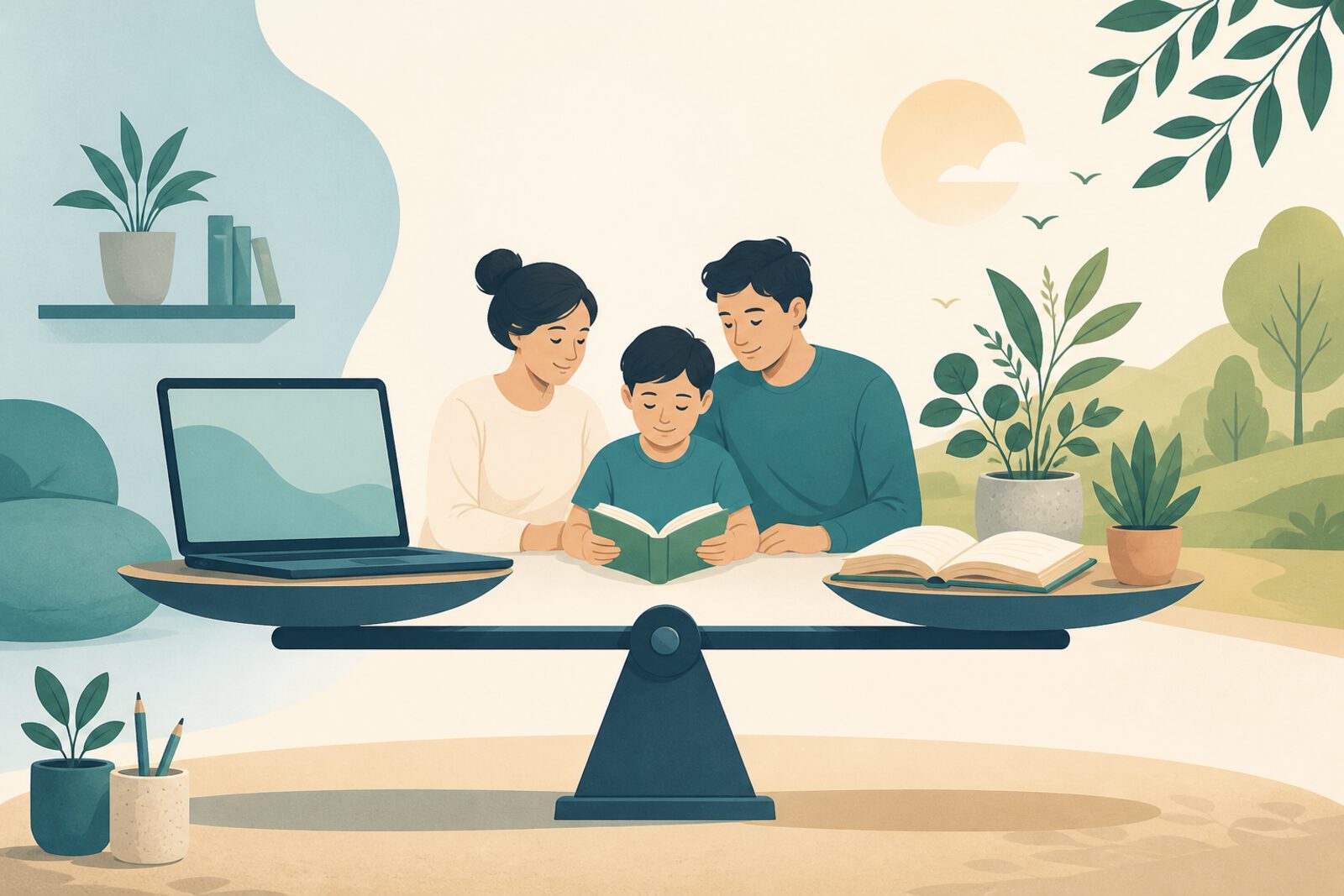
Not all screens are equal. A 30-minute tutoring call is not the same as two hours of scrolling. Digital wellbeing in online education is not about banning technology; it is about intentional choices: when screens help learning and when they only fragment attention.
Child-health and education guidance agree on protecting sleep, movement, and face-to-face connection. Sustainable online learning needs those three pillars; without them, even the best content yields little.
Three types of family screen time
- Learning screen: classes, practice, creation, tutoring.
- Coordination screen: calendar, tutor messages, submitting work.
- Leisure screen: social media, shows, games with no learning goal.
Mixing all three without labels creates endless arguments (“I am studying”). Agree on simple codes: focus mode, admin mode, rest mode. Focus mode usually means notifications off.
Agreements that beat punishments
Instead of “no phone ever,” try: study blocks without digital leisure; movement breaks; leisure with a visible schedule; devices charging outside the bedroom. Written agreements on a visible paper reduce daily negotiation.
If the adult also checks the phone every two minutes while supporting learning, the model speaks louder than the rule. Digital wellbeing is a family practice, not only a child issue.
Signs of overload
- High irritability when screen time ends.
- Delayed sleep or poorer rest quality.
- Frequent headaches or eye fatigue.
- Less desire to read, go outside, or talk.
When those signs appear, reduce dose before raising academic pressure. Sometimes “does not want to study” is really “is overstimulated.”
A one-week trial
For seven days, log learning minutes, leisure minutes, and mood quality (1–5). Do not chase perfection; look for patterns. Adjust one habit the following week. Progress in digital wellbeing is also measured in family calm, not only in minutes.