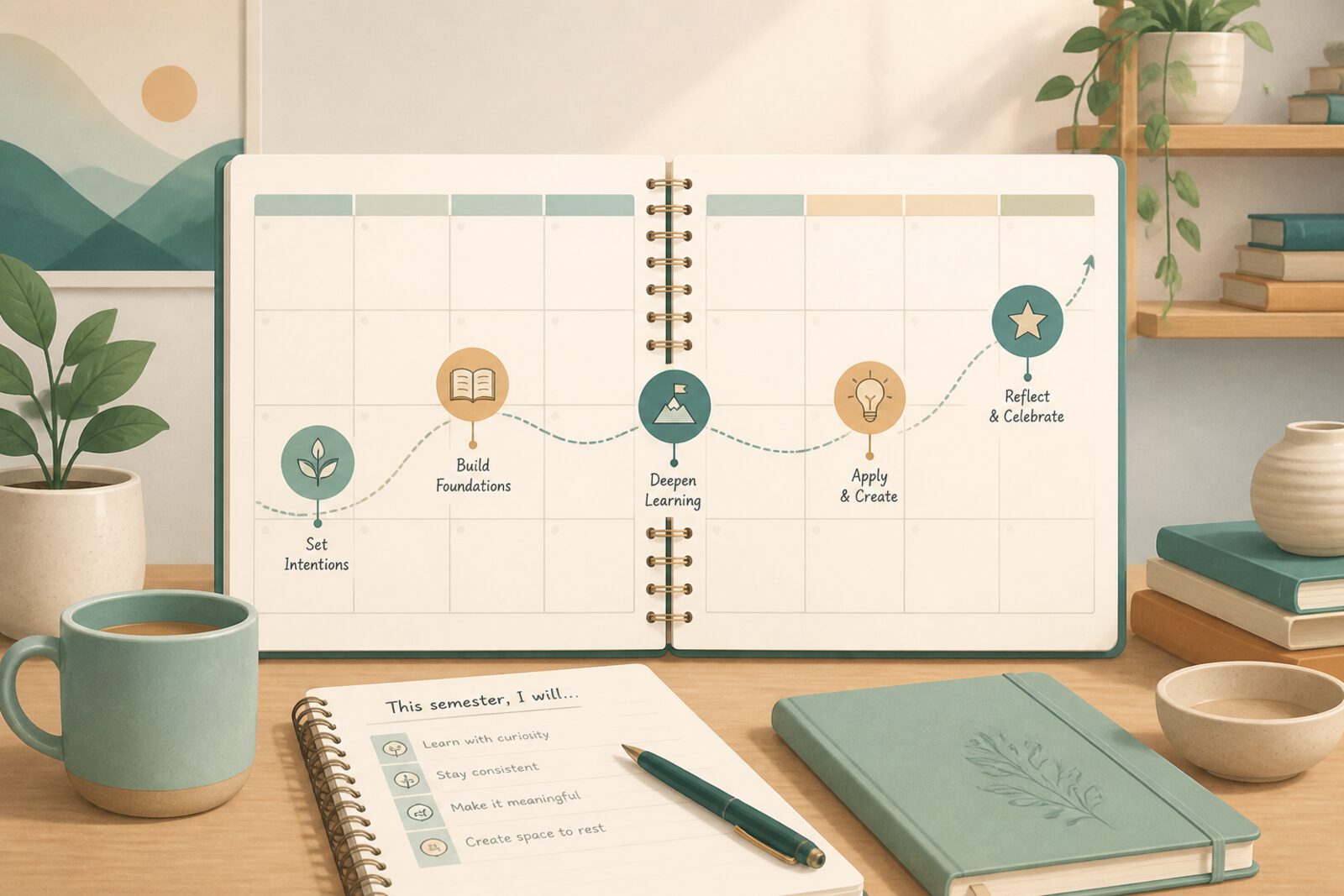
Planning a semester at home does not mean filling a board with impossible tasks. It means choosing a few priorities, defining progress evidence, and reviewing direction each month. Families who sustain online education over time usually win through consistency, not January intensity.
Step 1: three priorities, not thirty
Choose at most three semester focuses (for example: reading comprehension, meaningful math, one science project). Everything else is complementary. If everything is a priority, nothing is.
Step 2: a sustainable weekly rhythm
- Deep blocks at peak-energy times.
- One ongoing project or inquiry.
- A 20-minute weekly review (wins, friction, adjustments).
- Margins for the unexpected (health, visitors, low-energy days).
Step 3: monthly evidence
Each month, gather 3–4 pieces of evidence per focus and answer: what improved?, what is still hard?, what changes next month? This review prevents discovering in December that the plan was only a wish.
Express semester template
- One-sentence vision: “By the end of the semester we want…”
- Priorities (max 3) with observable indicators.
- Core resources (few and good).
- Milestone calendar (project, oral, portfolio).
- Support network: tutor, extended family, groups.
If midway the plan feels tight, cut before quitting. A “good enough” semester builds confidence. A heroic plan that lasts two weeks builds guilt. Family planning is an act of care, not total control.