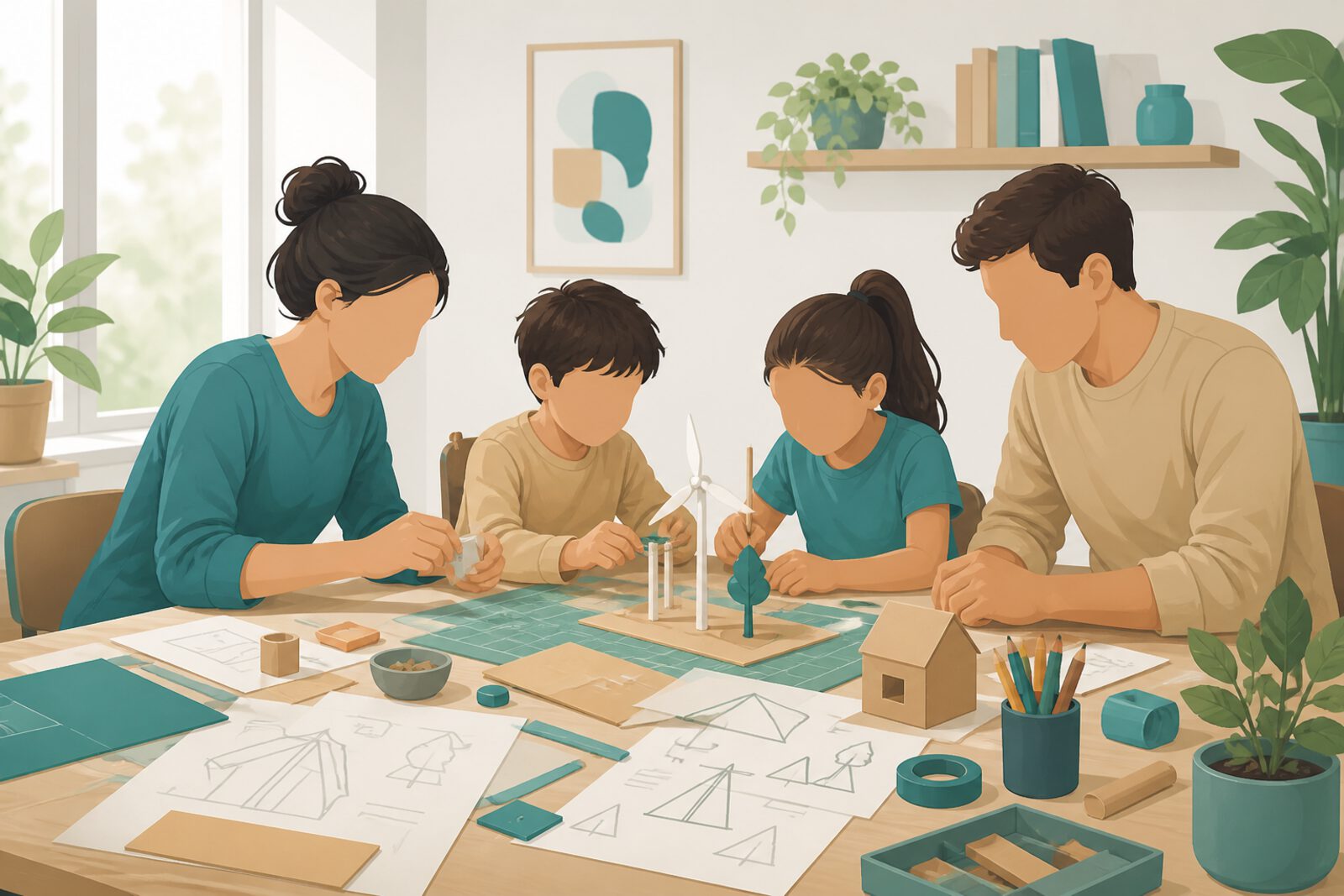
Project-based learning puts a question or challenge at the center and uses multiple skills to answer it. At home it works especially well because it connects to real life: cooking, planting, budgeting a trip, researching a local issue, or creating a family podcast.
It does not need an expensive lab. It needs a strong question, a short deadline, and clear “done” criteria. UNESCO and 21st-century competency frameworks highlight exactly this capacity to inquire, collaborate, and communicate.
Simple project structure (2–3 weeks)
- Driving question: open, interesting, and manageable.
- Inquiry: 3–5 sources or observations.
- Production: an object, text, video, model, or presentation.
- Communication: explain to family or a small audience.
- Reflection: what I learned and what I would change.
Examples for different interests
- Science: “Which plant grows best on our balcony and why?”
- Math: “How much does a healthy lunch for 4 people cost?”
- Language: “How can we tell our family story in 5 minutes?”
- Civics: “What neighborhood problem could we map and propose improving?”
The adult role
The adult does not do the project: they hold the frame. Help narrow the question, offer materials, ask about progress, and make sure there is a closing. If the project drags on, shrink the product: a poster is enough; you do not need a documentary.
Assess process and product. A “pretty” project made only by the adult teaches dependence. An imperfect project made by the child with timely support teaches method.
Common mistakes
- Choosing a huge topic (“the universe”).
- Skipping inquiry and jumping to decoration.
- Not setting a closing date.
- Forgetting the final reflection.
With a couple of projects a month, many families find more motivation than with endless lists of isolated exercises. Later they can add AI tools to organize sources—with care and adult judgment.